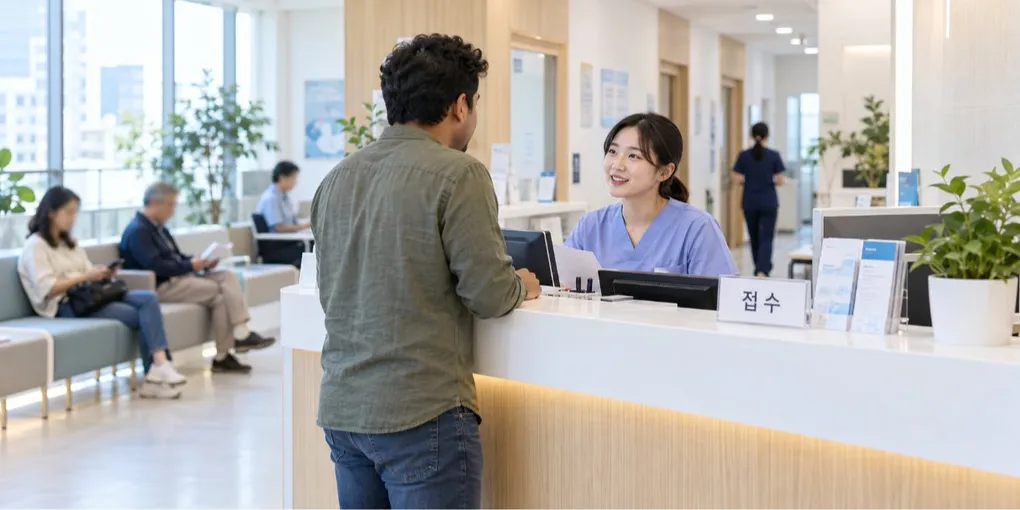
Korea’s public health insurance is one of the best things about living here: doctor visits are quick and affordable. But for foreign residents it is not optional. If you stay long enough, you are enrolled automatically, and the monthly bill arrives whether you use a hospital or not.
This guide explains how the National Health Insurance Service (NHIS) works for foreigners in 2026, so the first bill is not a surprise.
Two ways to be covered
Every insured person in Korea falls into one of two groups.
| Employee (workplace) member | Regional (local) member | |
|---|---|---|
| Who | People employed by a Korean company | Students, freelancers, self-employed, and others without a workplace plan |
| How you join | Your employer enrolls you | NHIS enrolls you automatically |
| Who pays | You and your employer split it | You pay the full amount |
| How it is calculated | A percentage of your salary | Your income and assets, with a minimum for foreigners |
When you are enrolled
Employees are covered from their first day of work, through the employer.
Everyone else is enrolled as a regional member after six months in Korea. Some visa holders are enrolled from the start instead: D-2 and D-4-3 students, E-9 workers, and F-5 and F-6 residents. Short-term visitors and diplomats are not enrolled.
You do not need to apply. The bill simply starts arriving at your registered address, which is one more reason to keep your ARC address up to date.
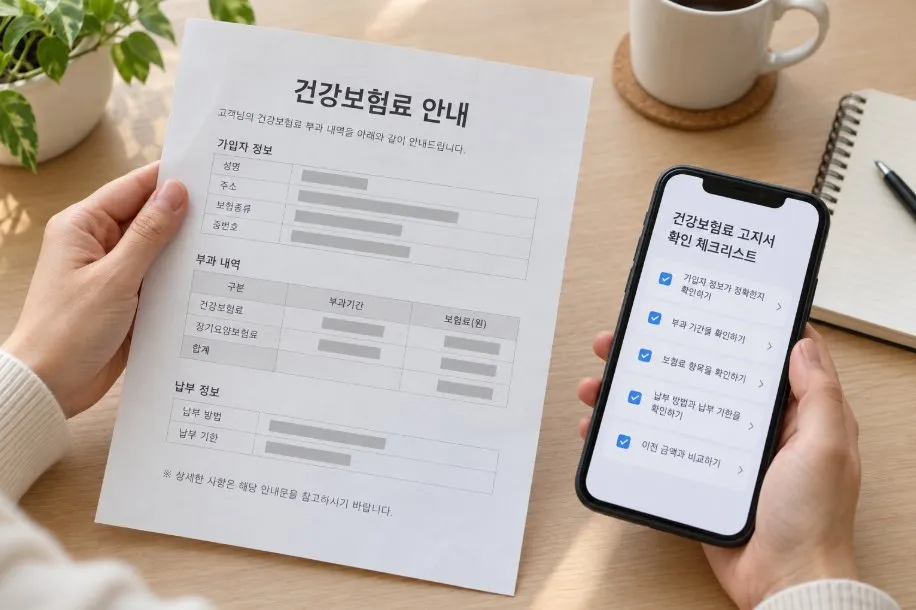
What you pay in 2026
Employees: the 2026 health insurance rate is 7.19% of salary, split equally between you and your employer, plus a smaller long-term care contribution. It is deducted from your paycheck automatically.
Regional members: most foreign regional members pay at least ₩158,630 a month in 2026. This minimum is set around the national average premium. If your income or assets are higher, the premium can be higher.
Students: D-2 and D-4 students receive a 50% reduction, which brings the premium to roughly ₩79,300 a month in 2026. The reduction can be lost if your income or assets exceed set limits.
Adding family members
You can usually register a spouse and children under 19 as dependents. Expect to submit a family relationship document from your home country, with an apostille or embassy confirmation and a Korean translation.
Since April 2024, family members arriving from abroad generally need to have stayed in Korea for six months before they can be added as dependents. Spouses and children under 19 of employee members are among the exceptions.
If you miss a payment
Unpaid premiums have real consequences:
- Benefits can be suspended, meaning you may pay 100% of your medical bills until the arrears are cleared
- Immigration can see the arrears, and visa extensions may be limited to short periods until you pay
Setting up automatic bank transfer is the simplest way to avoid trouble.
What it covers
With NHIS you pay only part of the bill. As a rule of thumb, you pay around 30% at a local clinic, a higher share at large general and university hospitals, and about 20% for inpatient care. Some treatments, such as many cosmetic procedures, are not covered at all.
Only in Korea Korea runs a single public insurer for almost the entire population, rather than many competing plans. That is why the same insurance card number works at virtually every clinic, hospital, and pharmacy in the country, and why there is no network of “in-plan” doctors to check before you book.
Quick checklist
- Check whether you are an employee member or a regional member
- Note your enrollment date: day one of work, six months after entry, or from entry for certain visas
- Keep your ARC address current so bills reach you
- Set up automatic transfer for regional premiums
- Register your spouse and children under 19 if eligible
- Save the NHIS foreign-language line: 1577-1000
This article is general information, not legal or financial advice. Premiums and rules change every year; confirm with NHIS (1577-1000) for your situation. Information as of October 2026.