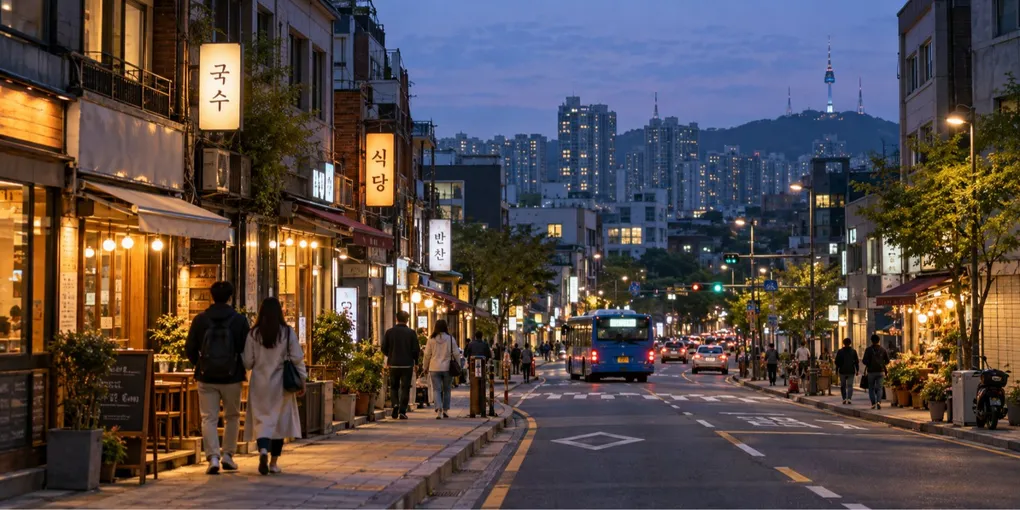
Seoul is not as expensive as Tokyo or Singapore for daily life, but one cost catches almost every newcomer off guard: the deposit. Monthly spending can be very reasonable once you are settled. Getting settled is the expensive part.
This guide breaks down what one person typically spends in Seoul in 2026, using recent Korean market data, so you can plan before you sign anything.
A realistic monthly budget for one person
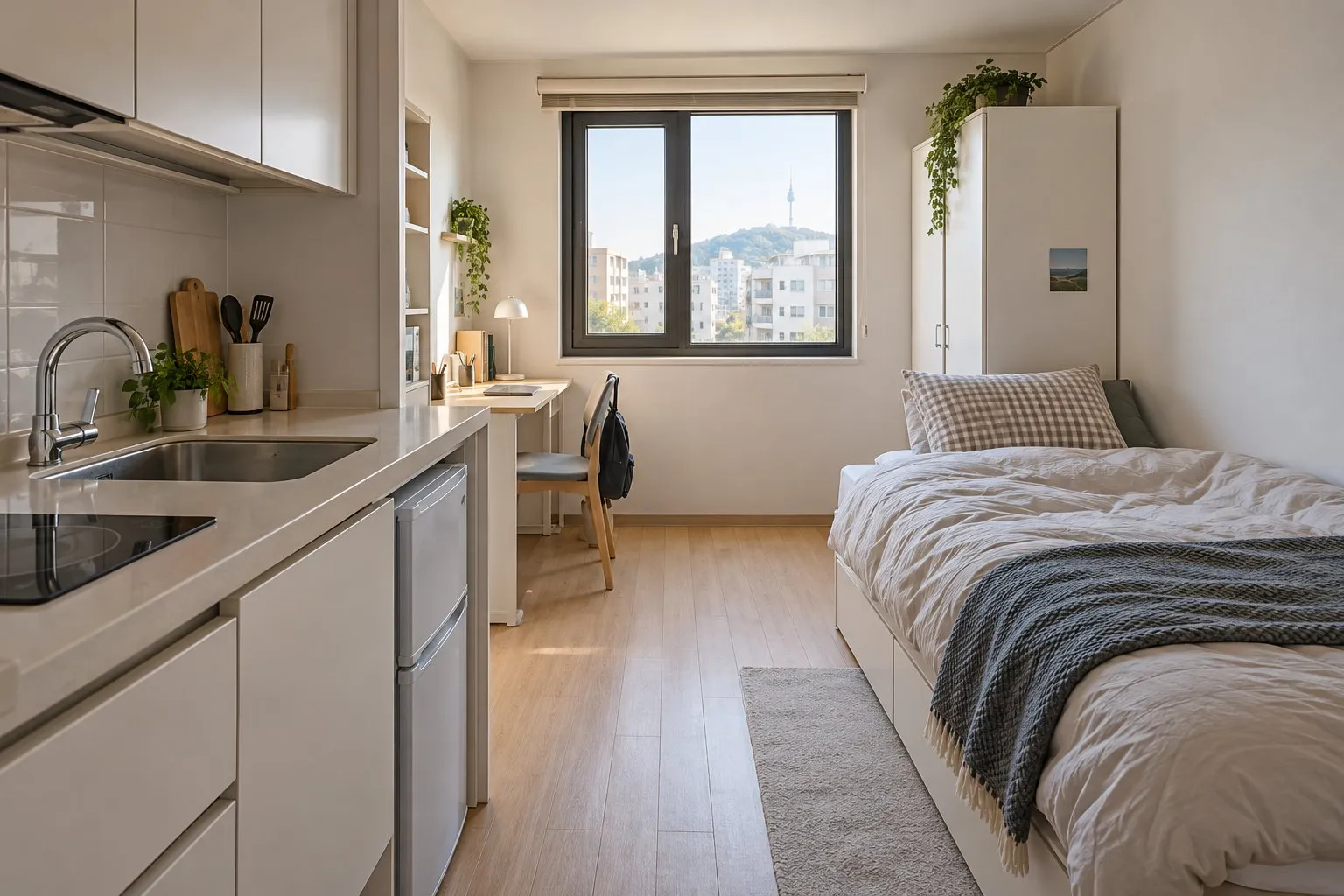
The table below assumes a small one-room (studio) in an ordinary neighborhood, cooking at home most days and eating out a few times a week.
| Item | Typical monthly cost (2026) |
|---|---|
| One-room rent (₩10 million deposit) | ₩600,000 – ₩700,000 |
| Building maintenance fee | ₩70,000 – ₩100,000 |
| Electricity, gas, water (if not included) | ₩50,000 – ₩100,000 |
| Mobile plan | ₩30,000 – ₩60,000 |
| Public transport | ₩60,000 – ₩70,000 |
| Health insurance | from about ₩158,000 (regional member) |
| Food and groceries | ₩500,000 – ₩700,000 |
| Total | roughly ₩1.5 – ₩1.9 million |
Rent and food make the biggest difference. A room in Gangnam or a lot of eating out pushes you toward the top of the range or past it.
Rent: the deposit comes first
Korean rentals almost always ask for a deposit (bojeunggeum) up front, returned when you move out. For one-rooms, ₩10 million is a common benchmark, and a bigger deposit lowers the monthly rent.
According to Dabang, a major listing platform, the average monthly rent for a Seoul one-room of 33 m² or less was ₩640,000 in June 2026 on a ₩10 million deposit basis. Gangnam-gu was the most expensive district at about ₩1.02 million. Near major universities, Dabang counted an average of ₩622,000 in rent plus ₩82,000 in maintenance fees in January 2026.
Before you pay a deposit, read our guide to Korea’s property registry so your money is protected.
Getting around
Seoul’s public transport is cheap and excellent:
- Subway: ₩1,550 base fare with a transit card
- City bus: ₩1,500 base fare with a transit card
- Taxi: ₩4,800 base fare for a standard taxi during the day
If you ride every day, Seoul’s Climate Card (Climate Companion Card) gives unlimited rides on Seoul subways and buses for about ₩62,000 a month. If you travel into Gyeonggi-do often, the national K-Pass card, which refunds 20% of your fares (30% for young adults), may work better.
Eating out
Korean set meals are still affordable, but prices have climbed. Average prices in Seoul from the Korea Consumer Agency’s 2026 survey:
| Dish | Seoul average |
|---|---|
| Gimbap (one roll) | under ₩4,000 |
| Jajangmyeon | about ₩7,500 |
| Kimchi jjigae set meal | about ₩8,650 |
| Kalguksu | about ₩10,000 |
| Bibimbap | about ₩11,800 |
| Naengmyeon | about ₩12,600 |
| Samgyeopsal (200 g serving) | about ₩21,300 |
Coffee is the surprise: a café latte often costs as much as a simple lunch. Convenience stores and lunch set menus are where many locals keep their food budget under control.
Phone, insurance, and the rest
- Mobile: budget carriers (MVNOs) offer generous data plans for ₩30,000 or less. See our guide to eSIM and SIM options in Korea.
- Health insurance: most foreign regional members pay at least about ₩158,600 a month in 2026; employees pay half of a 7.19% salary rate. Details are in our health insurance guide.
- Utilities: many one-rooms bundle water and internet into the maintenance fee, but electricity and gas are usually billed separately. Winter heating can double your gas bill.
For comparison: the minimum wage
Korea’s minimum wage for 2026 is ₩10,320 an hour, or about ₩2.16 million a month for full-time work including paid weekly rest. That puts the budget above in context: a single person living carefully in Seoul spends most of a minimum-wage income.
Only in Korea The deposit-based rental system is unique to Korea. Some tenants even pay a huge lump-sum jeonse deposit, often hundreds of millions of won, and pay no monthly rent at all. The landlord earns from the money while holding it. That is why your first month in Seoul can cost far more than every month after it.
Quick checklist
- Save for the deposit first, usually ₩5–10 million for a one-room
- Ask exactly what the maintenance fee includes
- Check the property registry before paying any deposit
- Get a Climate Card or K-Pass if you commute daily
- Switch to a budget mobile plan after you get your ARC
- Set aside about ₩160,000 a month for health insurance if you are not employed
This article is general information, not financial advice. Prices vary by neighborhood and change often. Figures are from Dabang, the Korea Consumer Agency and public fare tables, as of October 2026.