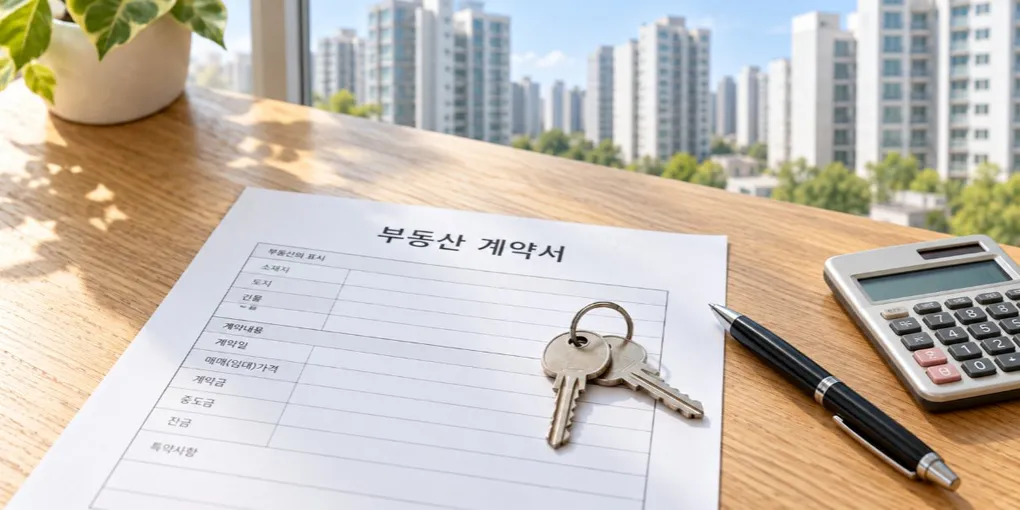
If you rent or buy a home in Korea through a licensed agent (공인중개사), you will pay a brokerage fee. Koreans usually call it bokbi (복비); the legal term is junggae bosu (중개보수). The good news: the law sets a ceiling on it, and once you know the table you can check any quote in under a minute.
This guide covers the current caps for homes, how agents calculate the fee for monthly-rent (wolse) contracts, and the questions worth asking before you sign.
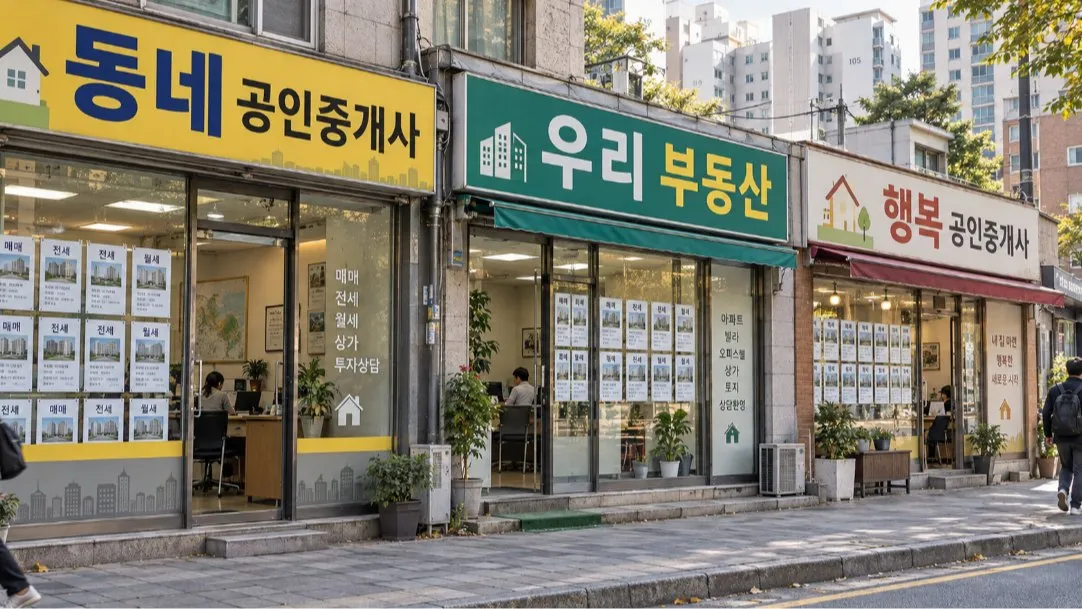
Who pays the fee
Each side pays its own fee. When you rent, you pay the agent that handled your side of the deal, and the landlord pays theirs. If one office represents both of you, each of you still pays a fee calculated on the same deal.
The fee is due when the deal is completed. Unless you agree otherwise, that is the day the remaining money is paid, which for most rentals is your move-in day.
The fee caps for renting a home
For a home rental, the fee is a percentage of the deal amount, up to a maximum rate. In the two lowest brackets there is also a won limit.
| Deal amount | Maximum rate | Fee limit |
|---|---|---|
| Under ₩50 million | 0.5% | ₩200,000 |
| ₩50 million to under ₩100 million | 0.4% | ₩300,000 |
| ₩100 million to under ₩600 million | 0.3% | — |
| ₩600 million to under ₩1.2 billion | 0.4% | — |
| ₩1.2 billion to under ₩1.5 billion | 0.5% | — |
| ₩1.5 billion or more | 0.6% | — |
For a jeonse lease, the deal amount is simply the deposit. A ₩300 million jeonse falls in the 0.3% bracket, so the most an agent can charge you is ₩900,000.
How monthly rent is converted
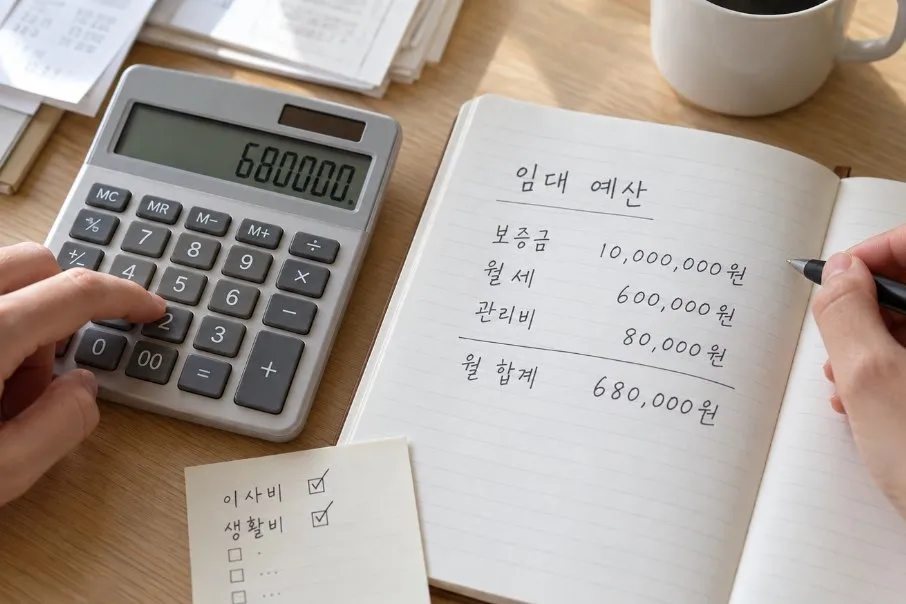
A wolse contract has two parts, a deposit and a monthly rent, so the law turns them into one number:
Deal amount = deposit + (monthly rent × 100)
If that total comes out under ₩50 million, the agent recalculates with 70 instead of 100:
Deal amount = deposit + (monthly rent × 70)
The second rule exists to keep fees low on cheap rentals. Three examples:
- Deposit ₩10 million, rent ₩700,000. 10M + 70M = ₩80 million. That is in the 0.4% bracket, which gives ₩320,000, but the limit for this bracket is ₩300,000. Maximum fee: ₩300,000.
- Deposit ₩5 million, rent ₩500,000. 5M + 50M = ₩55 million. Still ₩50 million or more, so no recalculation. 0.4% gives a maximum of ₩220,000.
- Deposit ₩3 million, rent ₩400,000. 3M + 40M = ₩43 million, which is under ₩50 million, so recalculate: 3M + 28M = ₩31 million. 0.5% gives a maximum of ₩155,000.
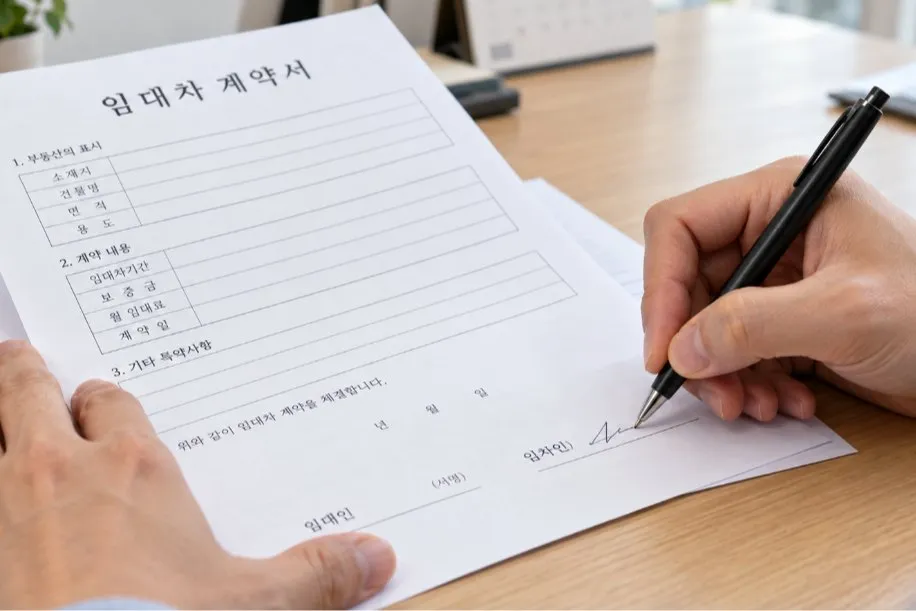
The fee caps for buying a home
Purchases use a separate table with slightly higher rates:
| Sale price | Maximum rate | Fee limit |
|---|---|---|
| Under ₩50 million | 0.6% | ₩250,000 |
| ₩50 million to under ₩200 million | 0.5% | ₩800,000 |
| ₩200 million to under ₩900 million | 0.4% | — |
| ₩900 million to under ₩1.2 billion | 0.5% | — |
| ₩1.2 billion to under ₩1.5 billion | 0.6% | — |
| ₩1.5 billion or more | 0.7% | — |
On an ₩800 million apartment, the cap is 0.4%, or ₩3.2 million. On a ₩1 billion apartment, it is 0.5%, or ₩5 million.
Officetels and other property
Officetels follow their own rule. If the officetel is used as a home, is 85 square meters or smaller (exclusive area), and has a kitchen, a toilet and a bathing facility, the cap is 0.5% for a sale and 0.4% for a rental. Shops, offices, land and other non-housing property can be charged up to 0.9%, agreed between you and the agent.
A cap is not a price
Every figure above is a maximum. The actual fee is whatever you and the agent agree within that limit, and it is normal to ask for less, especially on larger deals where the percentage adds up quickly.
A few habits make this easier:
- Agree on the fee before you sign the contract. Ask for the amount in won, not just the rate, and get it in a text message or written on the contract.
- Ask whether VAT is included. Depending on how the agent’s business is registered for tax, a value-added tax may be added on top of the fee.
- Look for the fee table on the wall. Agents must display the brokerage fee table in their office. If a quote is above the cap, point to it.
- Ask for a receipt. Pay by bank transfer or card and ask for a cash receipt (현금영수증) or a card slip, so you have a record of what you paid.
Only in Korea
Before licensed agents, Koreans found homes through the bokdeokbang (복덕방), a small neighborhood office usually run by older locals who knew every house on the block. The name is often said to come from saenggi bokdeok (생기복덕), a phrase tied to luck and good fortune, which suits a job of matching people with a lucky home. The licensed agent system arrived in the mid-1980s, with the first licensing exam held in 1985, but many people still call an agency a “bokdeokbang” today.
Many families also pick their moving day by a folk belief called son eomneun nal (손 없는 날), “a day without son.” Son is a spirit said to roam the four directions and get in people’s way, except on lunar dates ending in 9 or 0. Because so many moves crowd onto those days, movers tend to charge more, so a flexible moving date can save you money.
Quick checklist
- Work out the deal amount: jeonse = deposit; wolse = deposit + rent × 100 (× 70 if the total is under ₩50 million).
- Find the bracket, multiply by the rate, and apply the fee limit if there is one.
- Agree on the final amount, including VAT, before signing.
- Pay on the balance or move-in day and keep the receipt.
If you are still searching for a place, our guide on how to rent an apartment in Korea as a foreigner walks through the whole process.
This article is general information, not legal advice. Fee caps are based on Korea’s brokerage fee rules for housing in force as of October 2026, which each city and province applies through its own ordinance. Check the table posted in your agent’s office before you sign.